
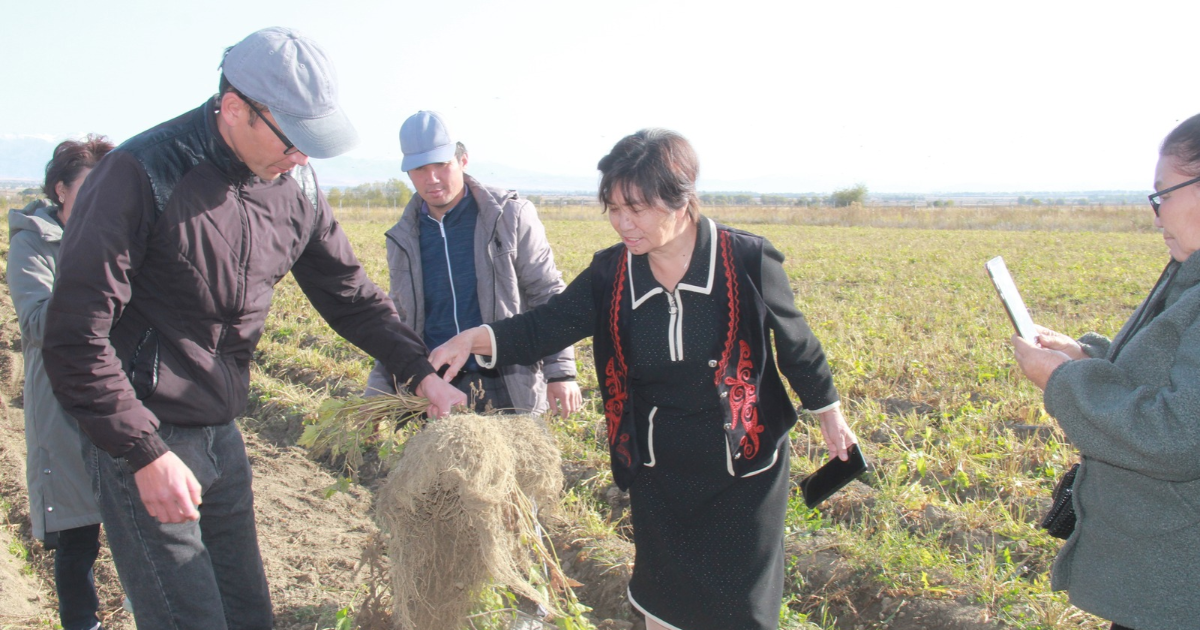
The EU-funded Go Green project helped rural communities build skills, strengthen local agricultural businesses and develop more climate-resilient livelihoods.
Rural communities in Kyrgyzstan face the effects of climate change and environmental degradation, alongside limited access to training, technology and markets. At the same time, the country’s rich biodiversity and traditional agricultural knowledge offer opportunities for sustainable rural development.
Through the EU-funded Go Green project, KMOP worked with local communities to turn those opportunities into practical support for farmers, young people and agricultural enterprises. The project promoted climate-resilient agriculture, with a particular focus on cultivating, processing and marketing medicinal and aromatic plants.
Building skills and local enterprise
KMOP coordinated the project with the Kyrgyz Rural Development Fund (RDF), whose established relationships with farmers, community organisations and local authorities helped ground the work in local needs.
The project trained 270 farmers and vocational education students in sustainable agriculture, medicinal plant cultivation, climate-resilient practices and entrepreneurship. It also introduced new educational approaches to medicinal plant cultivation in vocational education institutions.
To help communities put their skills into practice, Go Green provided small grants to 16 farmer communities and supported agricultural cooperatives working with medicinal plants. This support helped strengthen local value chains and create opportunities for rural people—particularly women and young people—to participate in green businesses.
Connecting producers and markets
Go Green established the Birlik farmers’ association and digital application to support communication, knowledge sharing and marketing opportunities among agricultural producers.
The project also helped create a central hub that brings together local small social enterprises to process raw materials and produce finished goods. Seven seasonal field stations were established across the Chui, Talas, Naryn, Issyk-Kul, Osh, Jalal-Abad and Batken regions, giving communities local points to receive medicinal plant materials.
Together, these initiatives strengthened cooperation among farmers, producers, local authorities and civil society organisations, while supporting more organised and market-oriented agricultural activity.
A locally grounded partnership
RDF played a leading role in implementing the project across Kyrgyzstan. Its experience in rural development, biodiversity conservation and sustainable natural resource management helped engage communities and support local ownership.
The partnership brought together KMOP’s experience in international development, social entrepreneurship and capacity building with RDF’s knowledge of Kyrgyzstan’s rural communities. This collaboration helped establish skills, structures and partnerships that communities can build on beyond the project.
Go Green was funded by the European Union through EuropeAid and ran from December 2020 to May 2023. KMOP coordinated the project in partnership with the Rural Development Fund.