
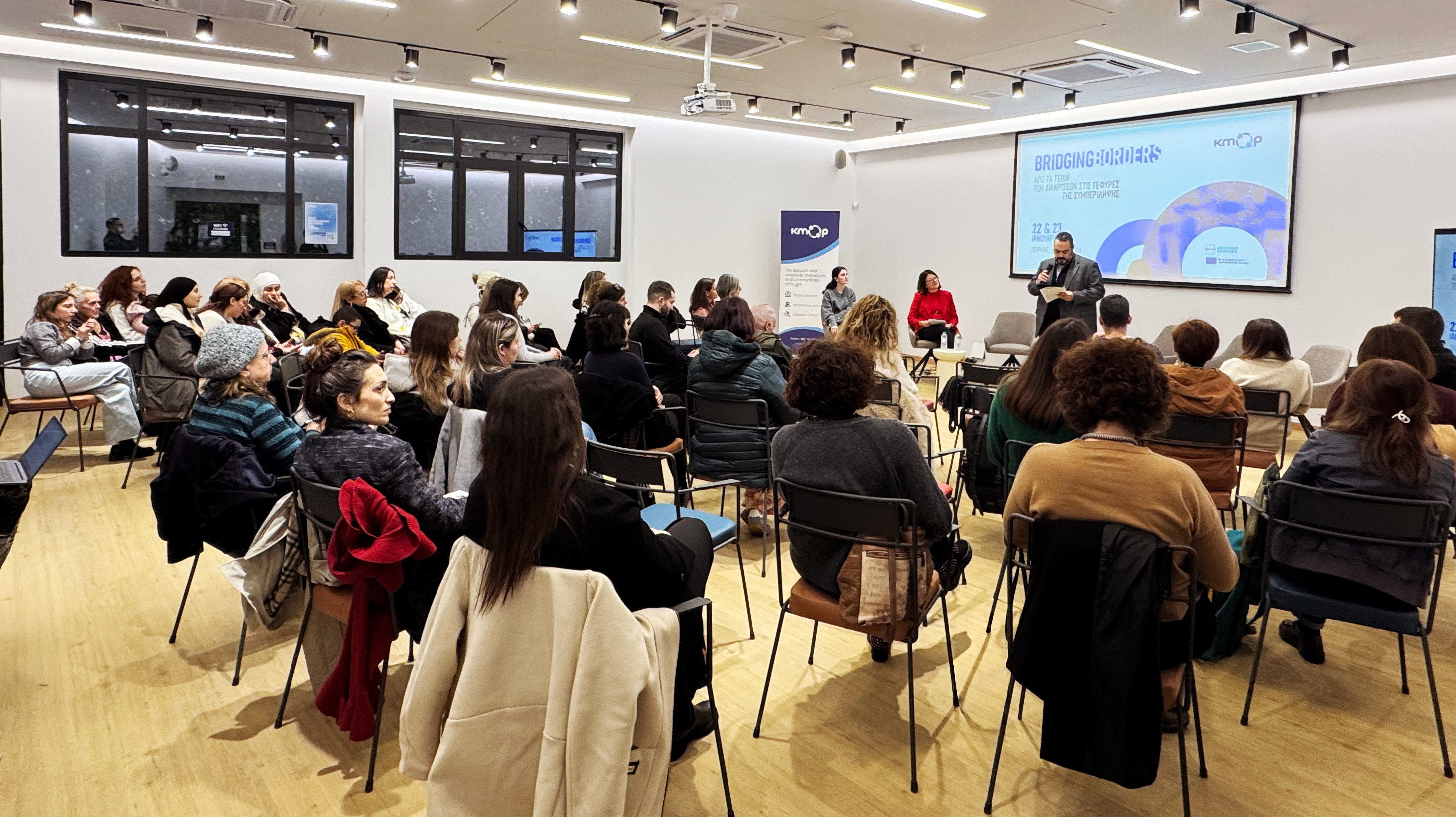
Discrimination may not always be visible, but we can tackle it through knowledge, dialogue and collaboration. This message shaped the two-day event “Bridging Borders: From the walls of discrimination to the bridges of inclusion”, which KMOP – Social Action and Innovation Centre organised in Piraeus on 22–23 January 2026. More than 100 participants — including social sector professionals, local authority representatives and policy makers — actively engaged in two days of discussions and experiential workshops designed to build a more inclusive society.
Data, dialogue and invisible discrimination
Jenny Lazarou, Programme Implementation Team Coordinator at KMOP, chaired the event. Christina Psorogianni, Management Advisor at KODEP, and Panagiotis Kyrimis, Head of Europe Direct Piraeus, delivered opening remarks.
During the first thematic session, Maria Elli Doufexi-Kaplani, Lead Researcher at KMOP, presented data and findings on discrimination in contemporary Greek society. Maria-Louiza Deftou, representing the Racist Violence Recording Network, commented on the research results.
The qualitative and quantitative research, conducted within the ECOSYSTEM project, showed that respondents consider discrimination based on specific characteristics to be very or fairly widespread. Participants most frequently identified discrimination based on gender, sexual orientation, gender identity and expression, social status, race, and national or ethnic origin.
Maria Elli Doufexi-Kaplani also highlighted the presence of unconscious discrimination, as reported by many participants. She introduced KMOP’s new self-reflection tool that explores automatic associations between gender, career and family. She further emphasised the high percentage of individuals who reported experiencing discrimination, as well as the widespread under-reporting caused by fear, bureaucracy and the normalisation of violence.
The panel discussion “Invisible discrimination: Challenges and opportunities in integration and inclusion” followed. Katerina Noumta, Programmes and Communications Officer at the Hellenic League for Human Rights, moderated the session. Panellists included Georgia Alexandrou (Scientific Lead, Women and Girls Friendly Space, KMOP), Nikos Alexiou (expert in migration governance and child protection), Nikitas Kanakis (Head of Social Services, KODEP), Younous Mouhammadi (Director, Greek Forum of Refugees), and Gina Psylliakou (Director, Velos Youth). Members of different communities then shared their personal experiences and perspectives, turning the discussion into a lively and interactive exchange.
From theory to practice
On the second day, participants moved from discussion to action. A series of experiential workshops created a dynamic space for participation and knowledge sharing, with a clear focus on translating theory into practice.
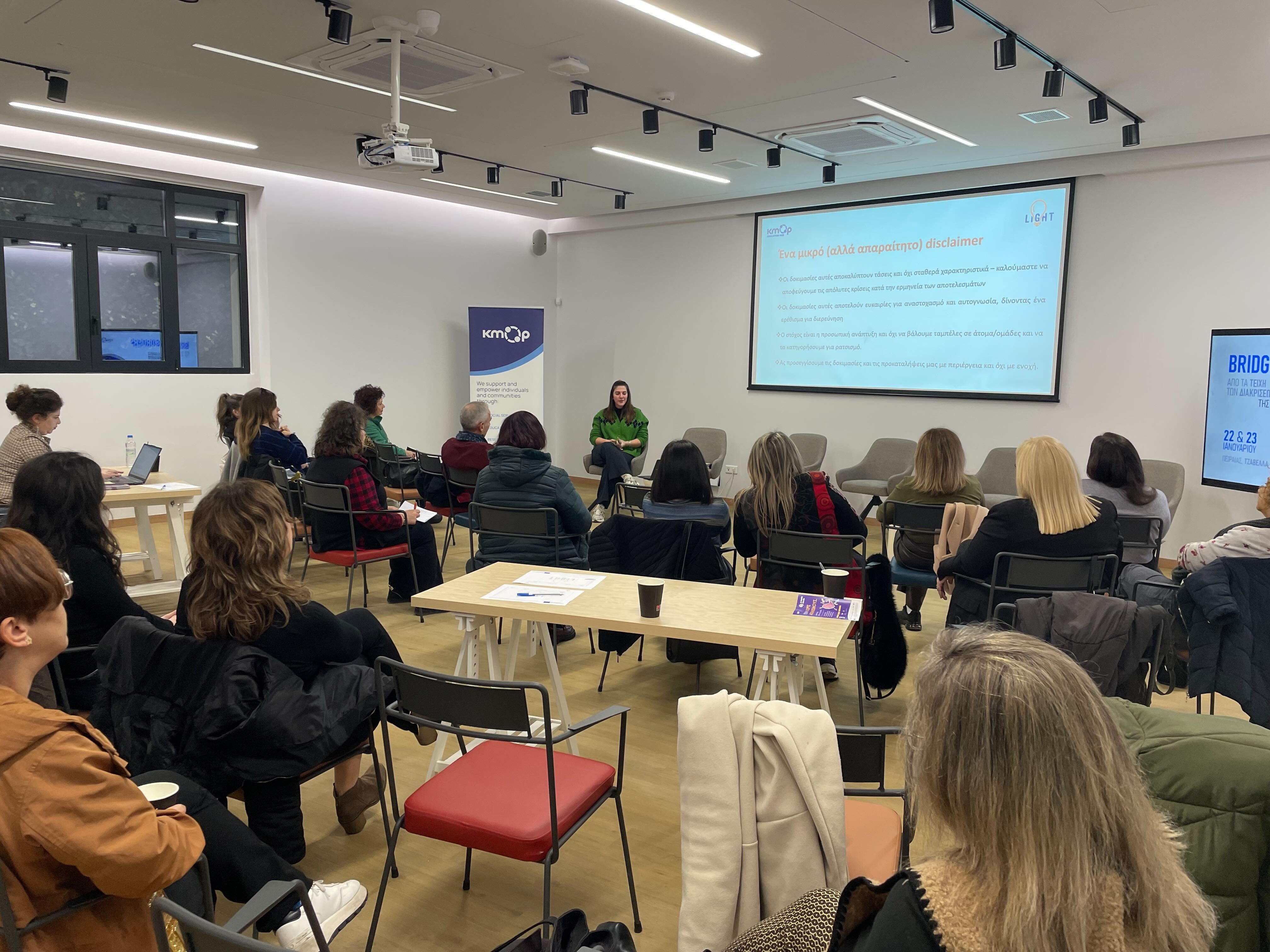
The programme included three interactive workshops:
“Testing our biases”: Georgia Alexandrou, researcher at KMOP, guided participants in exploring their unconscious biases regarding ethnicity, gender, age, disability, physical appearance, sexual orientation and Roma identity through hands-on activities and interactive quizzes.
“Historical memory and democratic values: Learning from the past, acting in the present”: Margarita Markoviti, Professor of Political Science and researcher at KMOP, analysed how prejudice and stereotypes escalate into exclusionary policies and eventually into acts of extreme racism. Drawing on examples from antisemitic propaganda preceding the Holocaust — such as the portrayal of Jews as “economic parasites” or “enemies of the nation” — she demonstrated how gradual dehumanisation legitimises violence. She connected historical antisemitism with contemporary forms of discrimination and racism against migrants, Roma communities and other groups, underlining how the mechanisms of hatred remain alarmingly similar today.
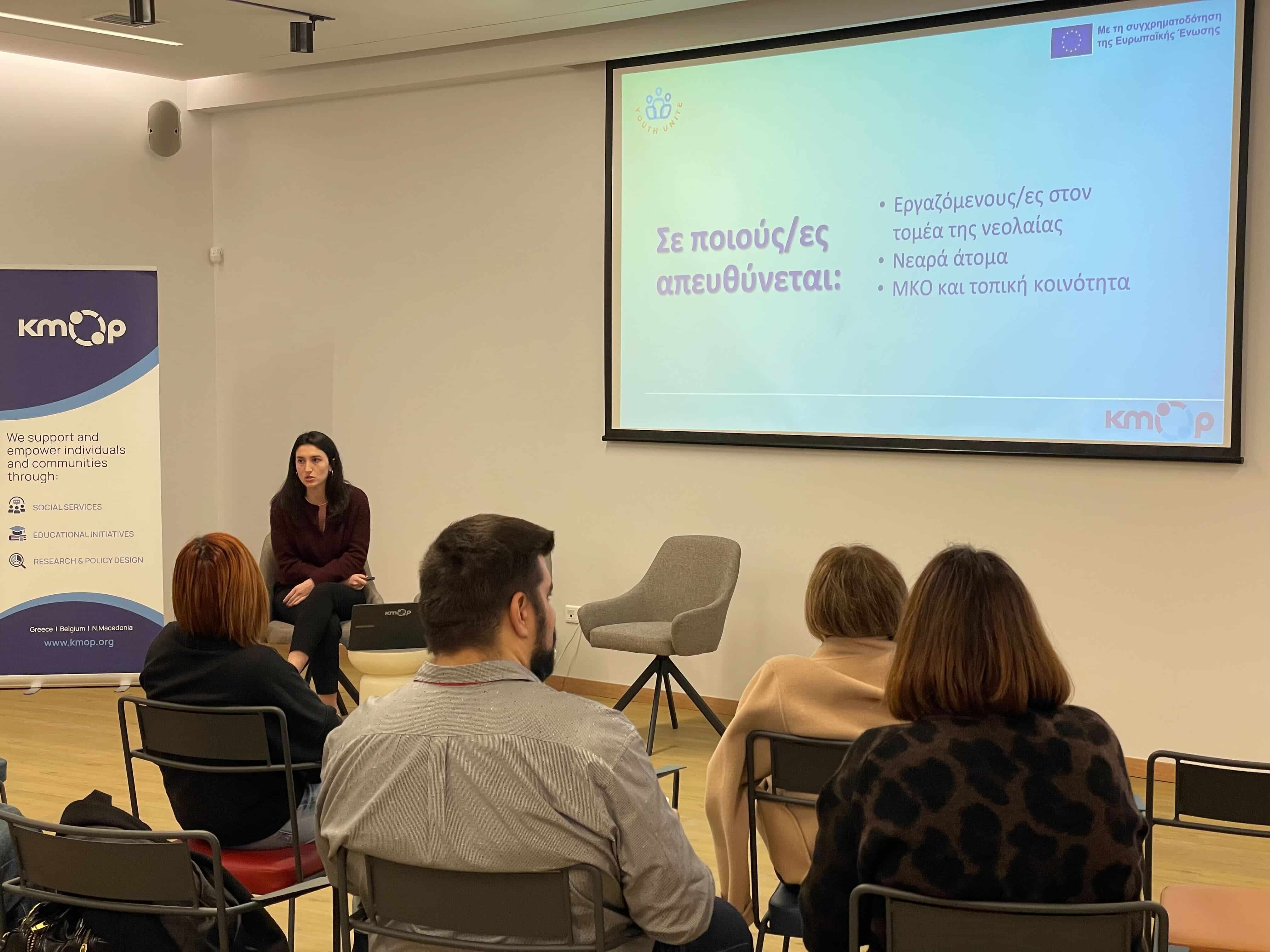
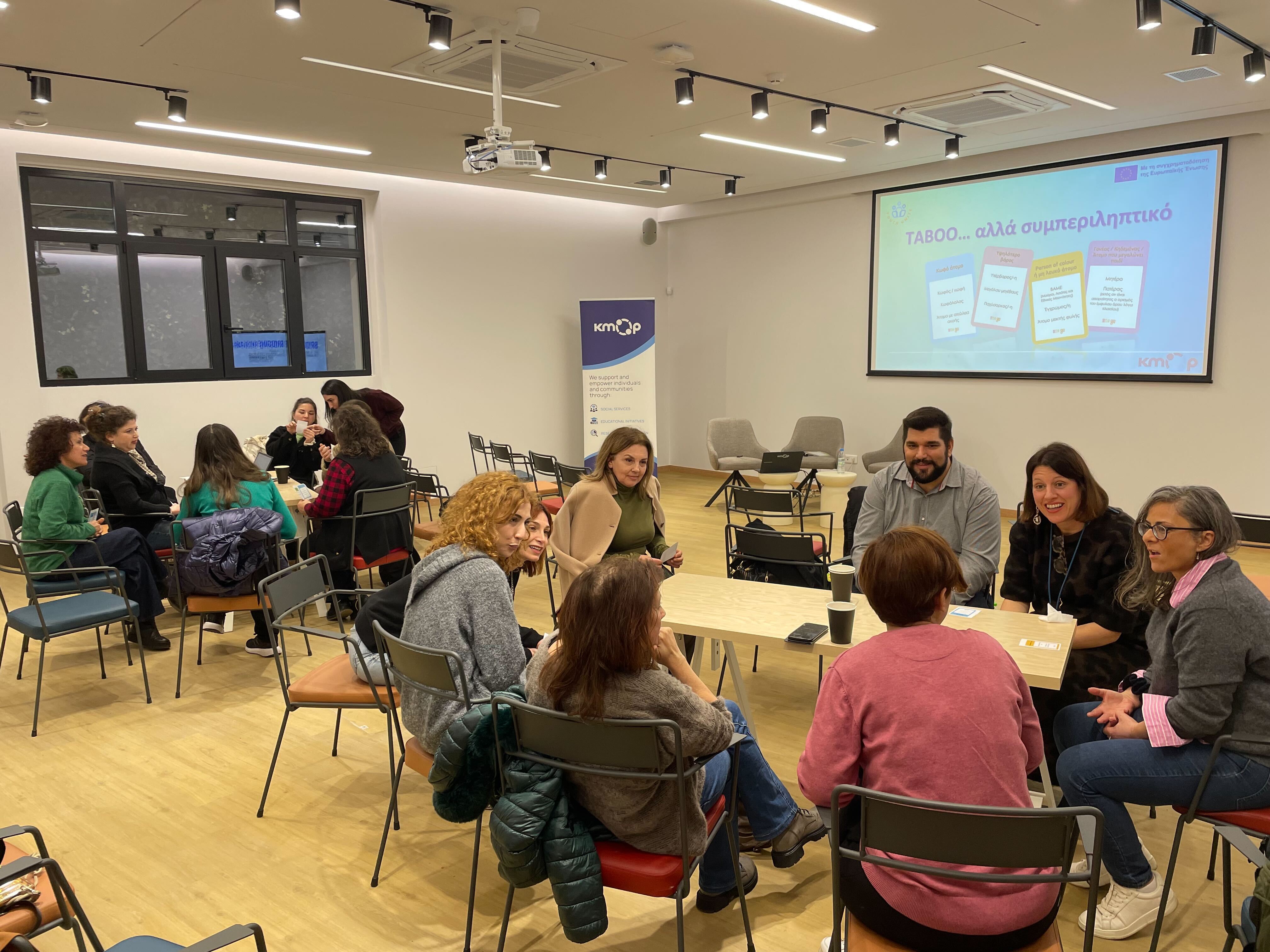
“Youth empowerment and safe spaces for participation: From theory to practice”: Angela Skempi, European Projects Manager at KMOP, presented practical methods for creating spaces where everyone feels welcome, visible and safe. The workshop placed particular emphasis on inclusive language. Participants also took part in an interactive activity, the “Inclusion Game”, which highlighted how easily everyday language can unintentionally exclude others and encouraged reflection, self-awareness and meaningful change.
Documentary screening and civic space dialogue
The event concluded with the screening of the documentary “We Make the Space”, which sparked an open and constructive discussion about the challenges facing civic space today in Greece, across Europe and internationally.
Rania El Ampasy, European Programmes Manager at KMOP, moderated the discussion. Participants addressed the shrinking space for civil society action, the pressures faced by organisations, and the importance of early risk detection.
KMOP also presented an innovative Early Warning Mechanism, a tool designed to record and monitor risks affecting civil society organisations. Participants explored the tool and completed it on behalf of their organisations, contributing to the mapping of trends and strengthening collective understanding of developments that affect civic space.
The event formed part of the “KMOP Dialogues” series, an initiative that brings together citizens, experts, organisations and civil society representatives to exchange knowledge and experiences, promote new approaches, develop impactful partnerships and co-create solutions to today’s and tomorrow’s social challenges.
For further information, please contact: [email protected]