
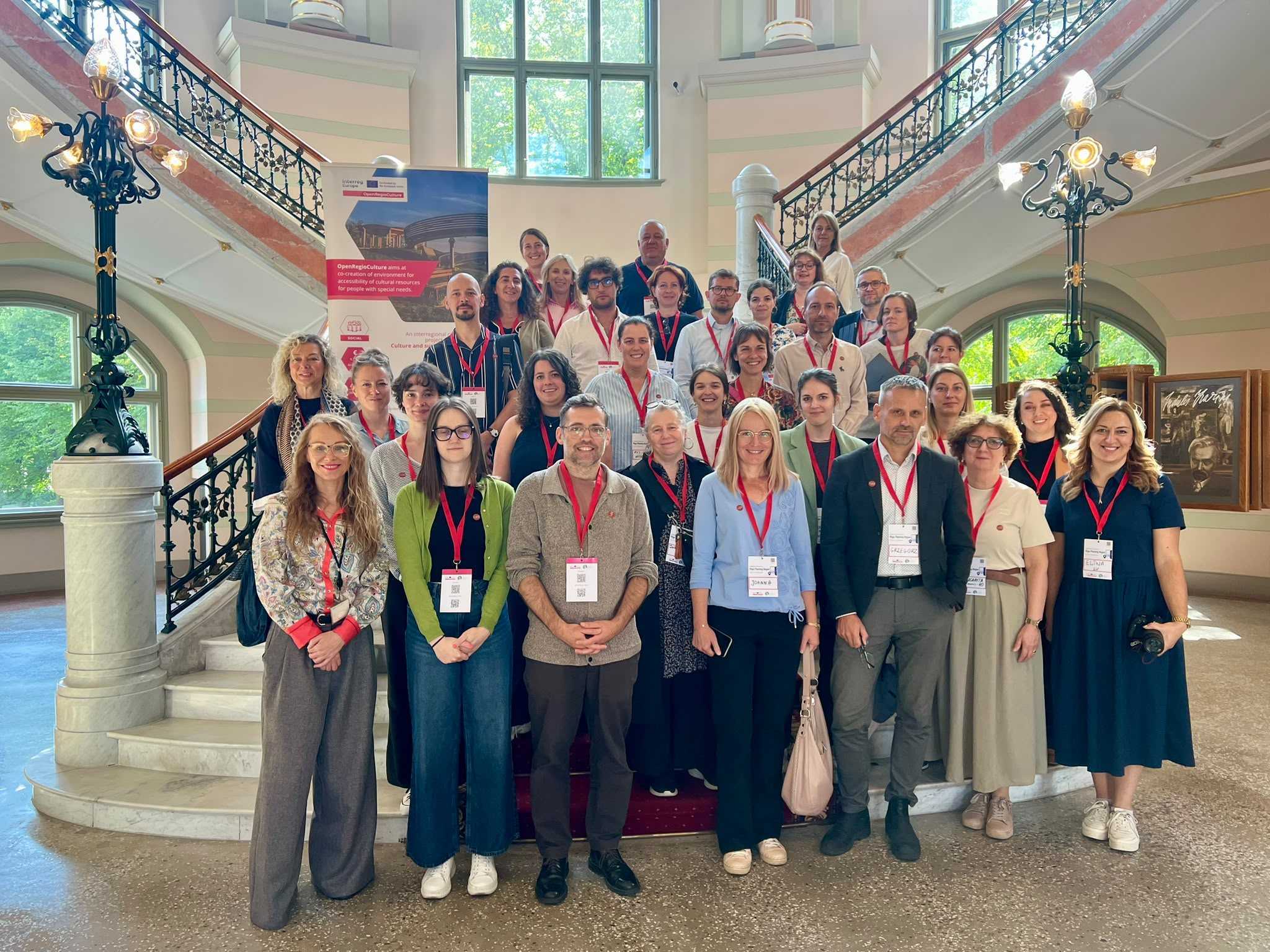
On 9–10 September 2026, KMOP joined representatives from the OpenRegioCulture project in Riga, Latvia, for an interregional learning and policy improvement event hosted by the Riga Planning Region. The two-day meeting brought together cultural organisations and stakeholders to explore practical approaches to making culture more accessible and inclusive.
A key message throughout the meeting was clear: accessibility should be built into cultural activities from the beginning, rather than added as an afterthought.
From policy to practice
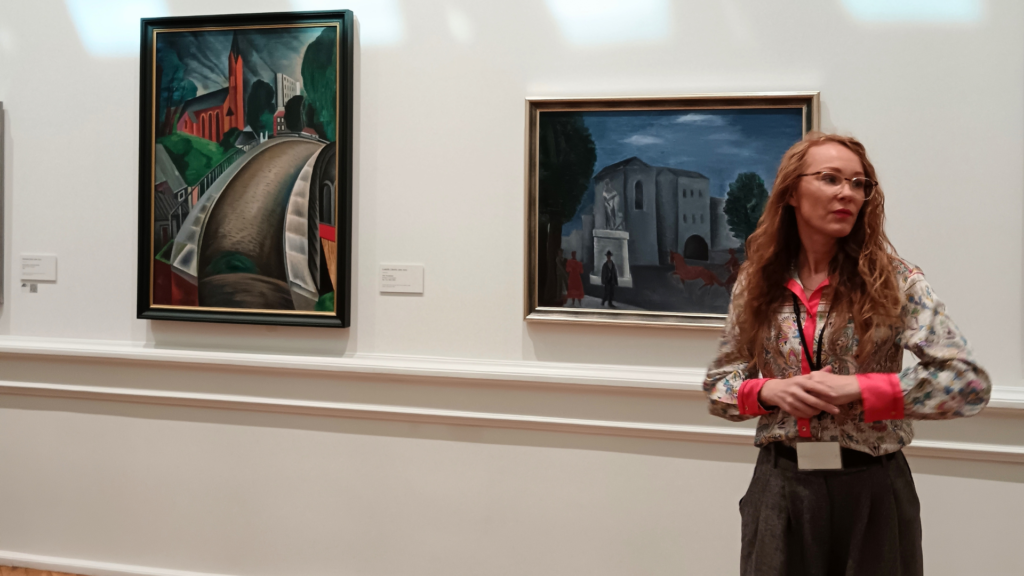
The Latvian experience demonstrated how accessibility can be supported through a combination of policy, funding, organisational practices and practical solutions.
The Latvian National Museum of Art showcased its approach to accessibility across spaces, services and cultural content, including accessible entrances, subtitles, hearing loops, tactile maps, Braille, audio description, multisensory tours and Easy-to-Read information. The museum is also developing more inclusive services for people with intellectual disabilities and people on the autism spectrum.
At Rīgas cirks, accessibility is being integrated into both the visitor experience and the organisation’s future development. Measures include accessible routes, wheelchair seating, sanitary facilities and induction loops, alongside staff training and plans for further improvements to the building.
Making the artistic experience more inclusive
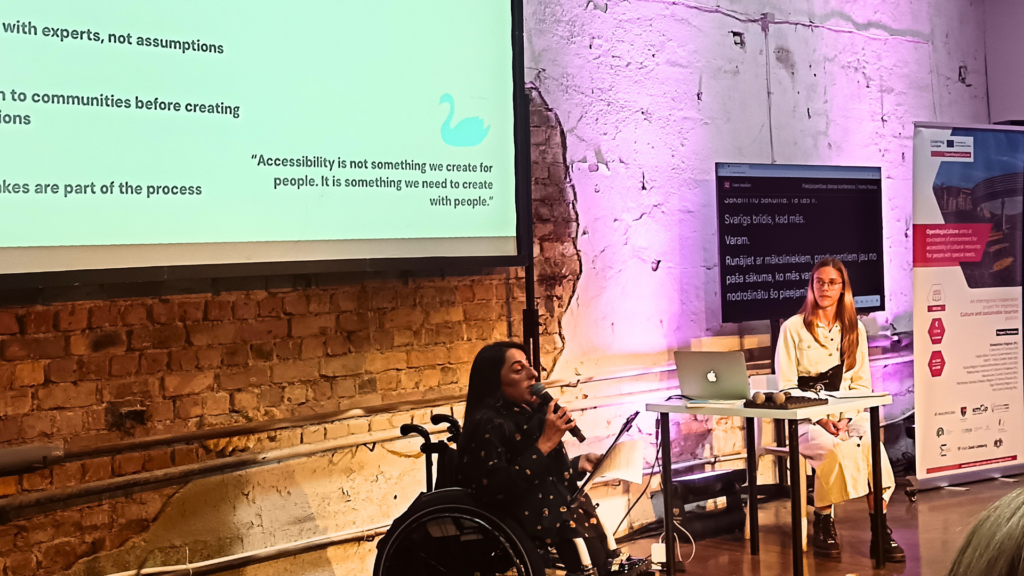
The Homo Novus Festival shared its experience of making contemporary performing arts more accessible, particularly when performances take place in unusual or temporary venues.
The festival was the first in Latvia to introduce relaxed performances, adapting lighting, sound and audience expectations to create a more comfortable environment for people with sensory sensitivities and neurodivergent audiences. It has also introduced an Easy Language approach to make its programme more accessible while preserving the character of the artistic works.
Participants also explored how art can be experienced in different ways, including through a tactile map of the Daugava River and discussions on sign language interpretation. These examples highlighted the importance of involving accessibility experts and audiences in the creative process from the start.
From knowledge exchange to better policies
The Riga meeting demonstrated how practical solutions can help cultural organisations create more inclusive experiences while also informing regional policies and strategies.
For OpenRegioCulture partners, the next step is to translate the lessons from Riga and other interregional exchanges into concrete policy improvements in their own regions.
As part of the project, KMOP supports efforts to make cultural spaces and experiences more accessible and inclusive, helping bring the lessons and good practices shared through the project into wider discussions on cultural policy and practice across Europe.
Stay connected with the OpenRegioCulture project to discover more good practices and policy developments: