
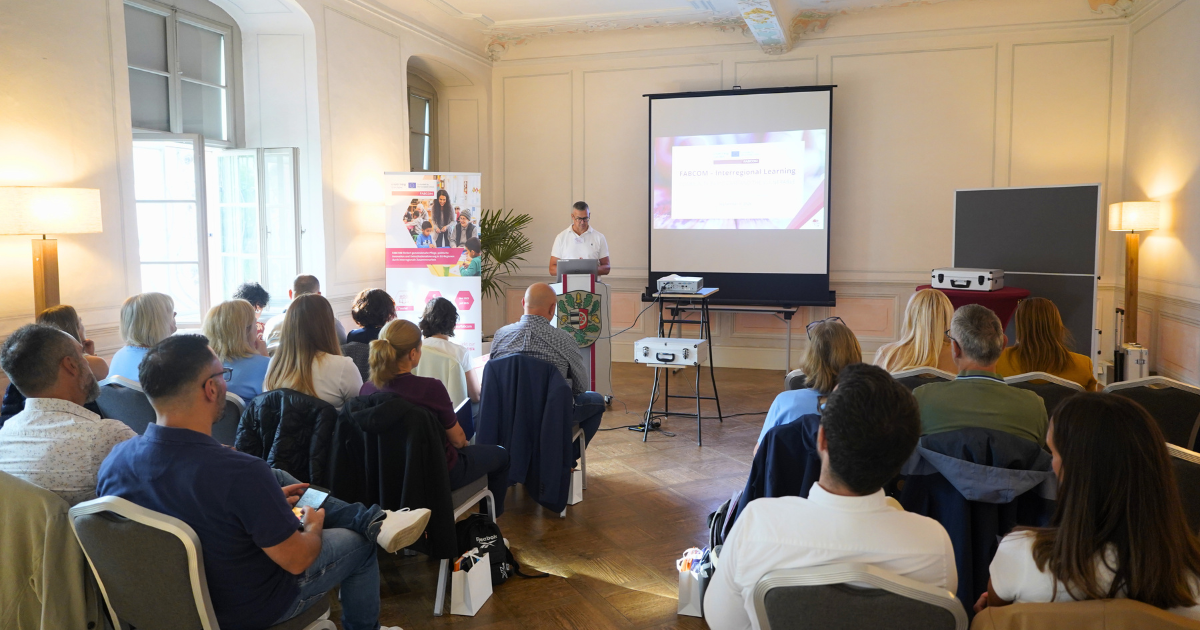
How can we make sure that people receive the support they need within their communities, with access to the services and opportunities that are part of everyday life?
KMOP contributed to this discussion during a study visit to the County of Offenbach, Germany, on 9–10 September 2026, exploring how community-based care is implemented in practice. Drawing on almost 50 years of experience in social service provision and 22 years of expertise supporting the transition from long-stay psychiatric institutions to community-based care, KMOP shared knowledge and lessons from Greece with other European regions, while identifying practices that could inform and strengthen community-based care in different regional contexts.
Learning from community-based services in Germany
Hosted by Pro Arbeit – Kreis Offenbach – AöR, the two-day study visit, organised as part of the Interreg Europe project FABCOM, brought together stakeholders from different European regions for policy discussions, knowledge exchange and visits to community-based services in Seligenstadt, Offenbach, Dreieich and Neu-Isenburg.
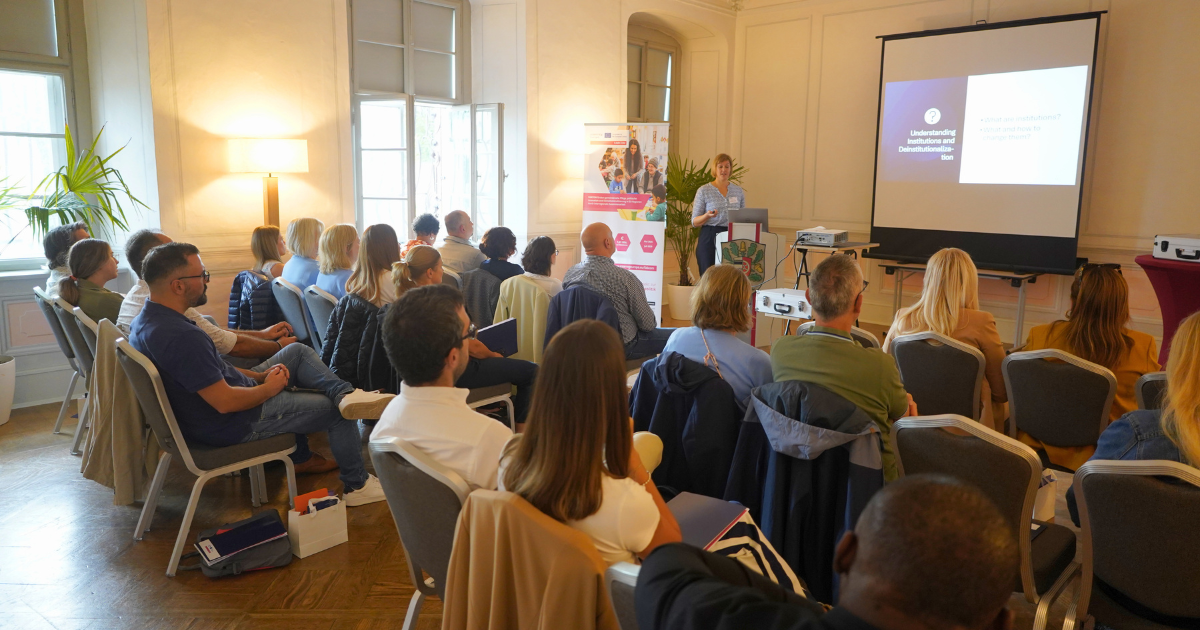
At Kloster Seligenstadt, Prof. Dr Wiebke Falk of Fulda University of Applied Sciences examined Germany’s transition away from institutional care, focusing on the challenges of translating policy into effective support within communities. Miriam Mauthe from the Offenbach District Ageing Co-ordination Centre then led a workshop on how local services can be organised around people’s everyday lives, with particular attention to access, participation and cooperation between local actors.
The workshop created space for knowledge transfer between participating regions, the exchange of experiences and ideas, and discussion of approaches that could be adapted to different local contexts. KMOP contributed its own long-standing expertise in community-based care, highlighting lessons from Greece and the importance of connecting psychosocial support with people’s everyday lives, autonomy and participation rather than treating care as an isolated service.
Seeing community-based support in practice
We also visited local organisations across the County of Offenbach to see how community-based care works in practice and how different services respond to people’s needs within their communities. The visits presented approaches ranging from early intervention and support for people with disabilities to social inclusion, rehabilitation and pathways into employment, demonstrating how different forms of support can connect with people’s everyday lives.
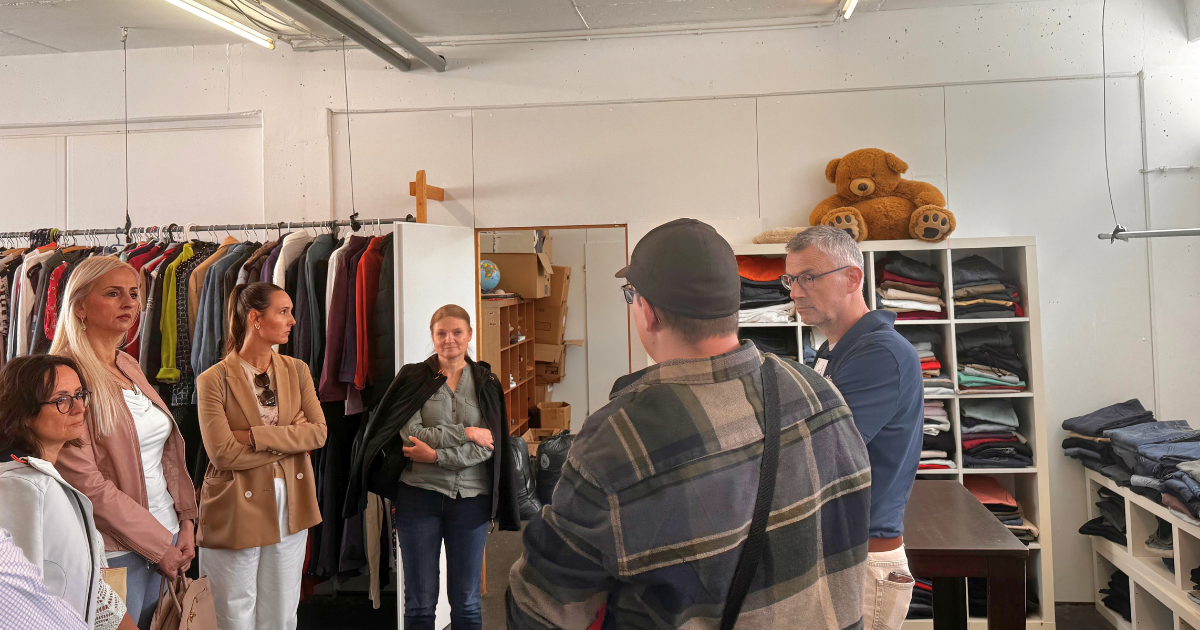
These examples reinforced an important principle: community-based care is not simply about moving services outside institutions. It is about organising coordinated support around people and their needs, enabling them to participate in community life, access opportunities and live with greater autonomy and independence.
The study visit reinforced a central lesson: the transition from institutional to community-based care depends on services working together around people’s lives, connecting social care, health, employment and civil society while keeping autonomy, dignity and participation at its core.
Through FABCOM, KMOP is working to turn the knowledge, experience and promising practices exchanged between European regions into concrete policy improvements, helping strengthen access to high-quality, rights-based community and family-based care across Europe.
For further information, contact us at: [email protected]