
“Sport has the power to change the world.” – Nelson Mandela
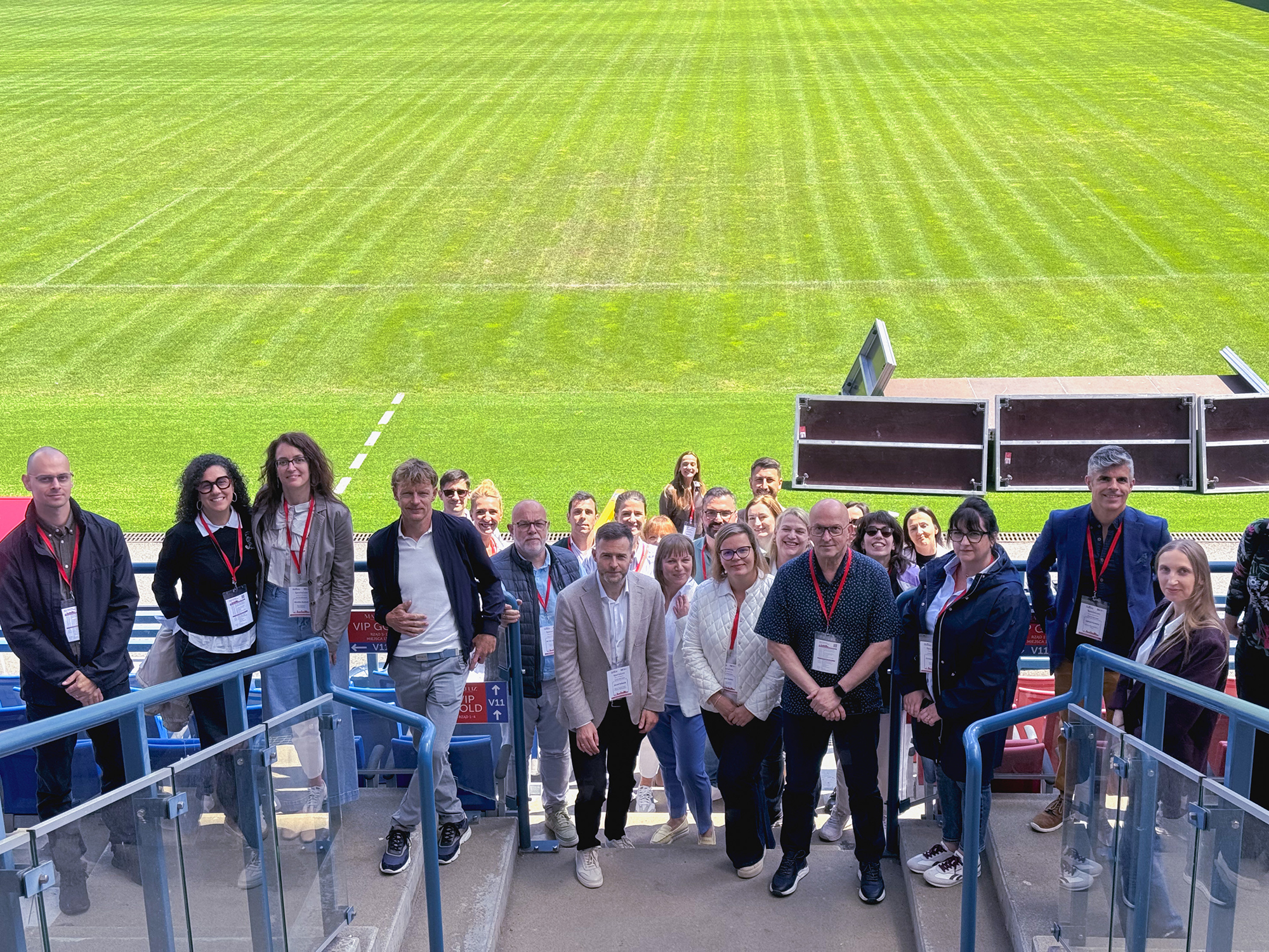
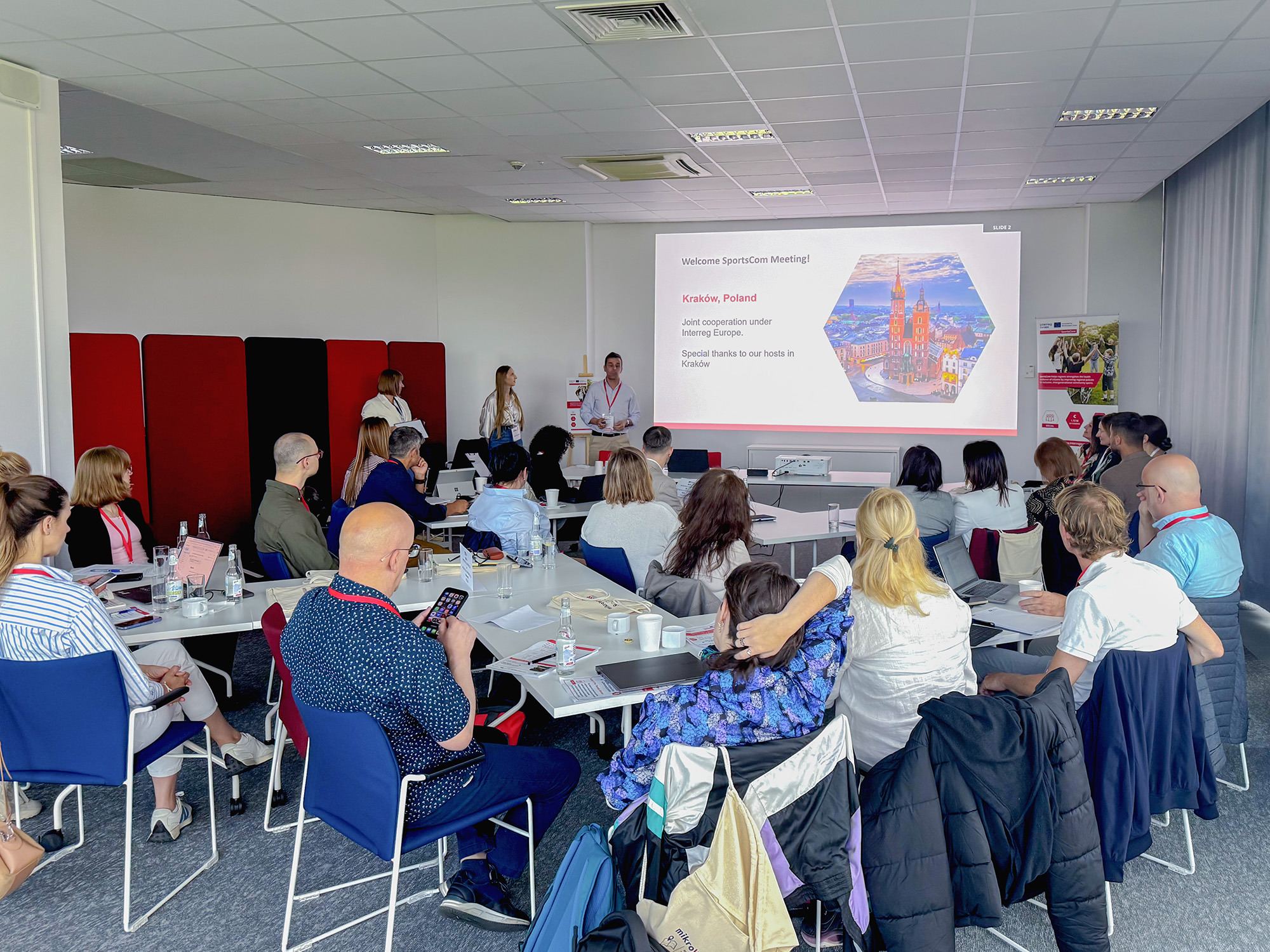
This belief was at the heart of the recent “SportsCom” interregional meeting hosted by the Kraków Metropolitan Area in Poland on 16–17 June 2026, where KMOP joined representatives from local and regional authorities, sport organisations, and community stakeholders from across Europe to explore how community sport can strengthen mental health, social inclusion, and resilience.
Community sport in action
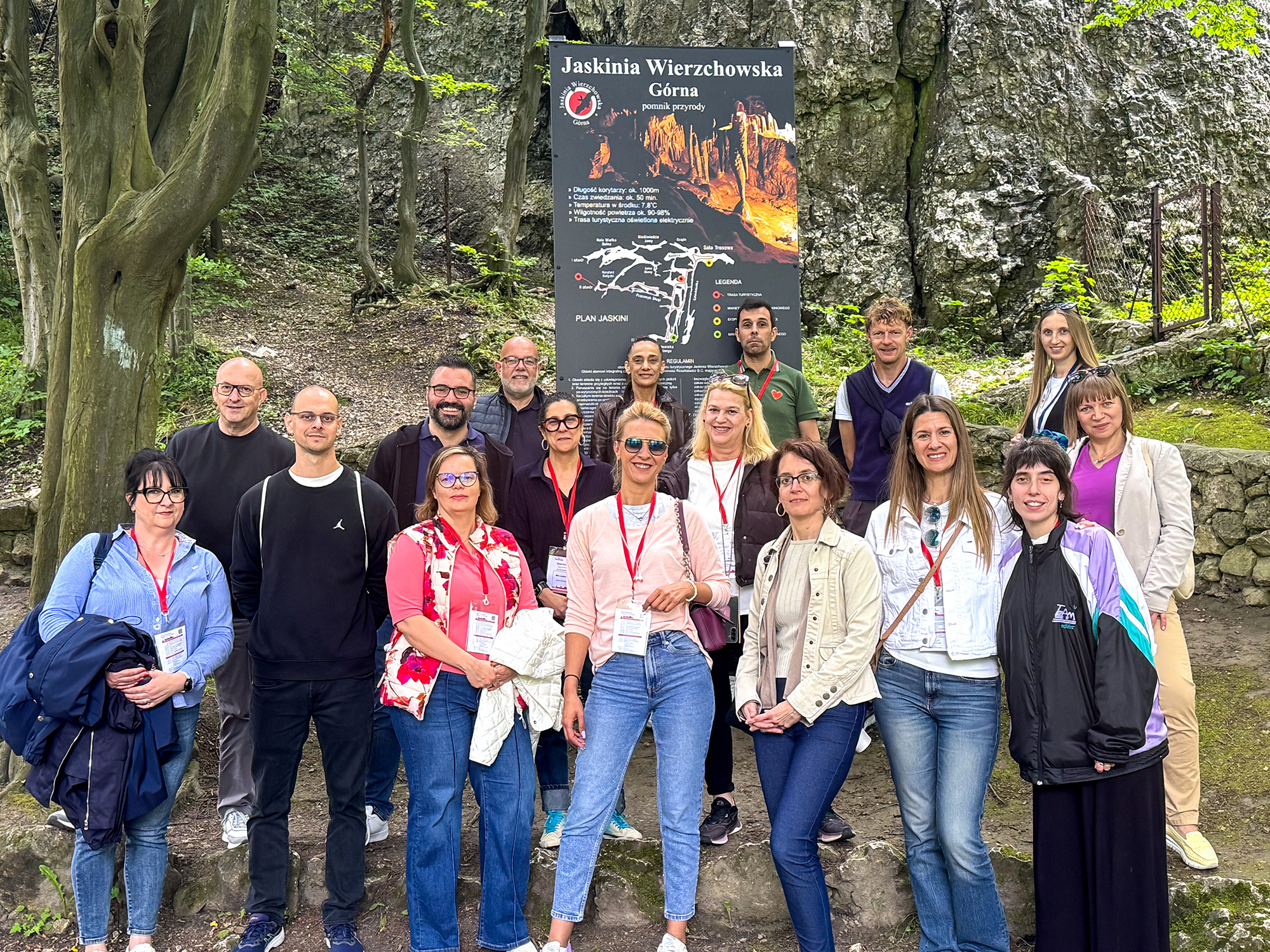
The study visit showcased how local authorities are embedding sport into everyday community life to improve wellbeing and strengthen social connections.
The Local Development Association INICJATOR and the Wielka Wieś Commune demonstrated how initiatives such as Nordic walking trails and weekly group activities help reduce social isolation while encouraging active lifestyles and stronger community ties.
The Municipality of Zielonki shared its Family in Zielonki initiative, which connects school-based support services with local sport opportunities to strengthen children’s mental resilience and promote healthier family relationships.
The Municipality of Kraków highlighted its long-term strategy of integrating sport into public health policy. A flagship example is the Kraków Youth Olympics, a city-wide school sport programme engaging around 15,000 young people each year, promoting healthy lifestyles, inclusion, and resilience.
Participants also explored the “In Motion” programme developed by the Kraków Specialist Psychological and Pedagogical Counselling Centre, which equips physical education teachers with practical skills to better support the mental wellbeing of children and young people.
Sharing good practices across Europe
The meeting also provided an opportunity for participating regions to exchange policies and practices demonstrating how community sport can address local social challenges.
In Hungary, the Municipality of Nyíregyháza engages around 15,000 residents annually through recreational sport events, family activities, and inclusive programmes that encourage active lifestyles and community participation.
In the Netherlands, the Municipality of Heerenveen is developing Campus Sportstad Heerenveen, bringing together sport, education, healthcare, and community organisations to improve wellbeing through cross-sector collaboration.
In Portugal, the Porto Metropolitan Area and the Municipality of Maia shared initiatives supporting citizens throughout their lives—from active mobility programmes for young people to activities tackling loneliness and promoting healthy ageing.
Representing Greece, the Regional Development Fund of Attica presented an integrated approach combining sport, mental health, social inclusion, and public space development. A flagship example is the AENAON Metropolitan Park, which integrates walking and cycling routes, sport facilities, and accessible green spaces to support physical and mental wellbeing.
From knowledge exchange to better policies
The experiences shared in Kraków demonstrated that community sport is far more than physical activity. It is a powerful policy tool for improving mental wellbeing, strengthening social cohesion, and building healthier, more resilient communities. The insights gathered during the meeting will contribute to the development of more effective regional policies that harness the transformative power of sport to improve mental health and wellbeing across Europe.
As the project’s Communication and Dissemination leader, KMOP contributes to ensuring that knowledge, good practices, and policy insights generated across participating regions are effectively communicated, supporting policy learning and helping successful approaches reach policymakers, practitioners, and communities across Europe.
Stay connected with the “SportsCom” project to discover more good practices and policy developments:
- Website: https://www.interregeurope.eu/sportscom
- LinkedIn: https://www.linkedin.com/company/sportscom-project/
- Facebook: https://www.facebook.com/sportscomproject/