
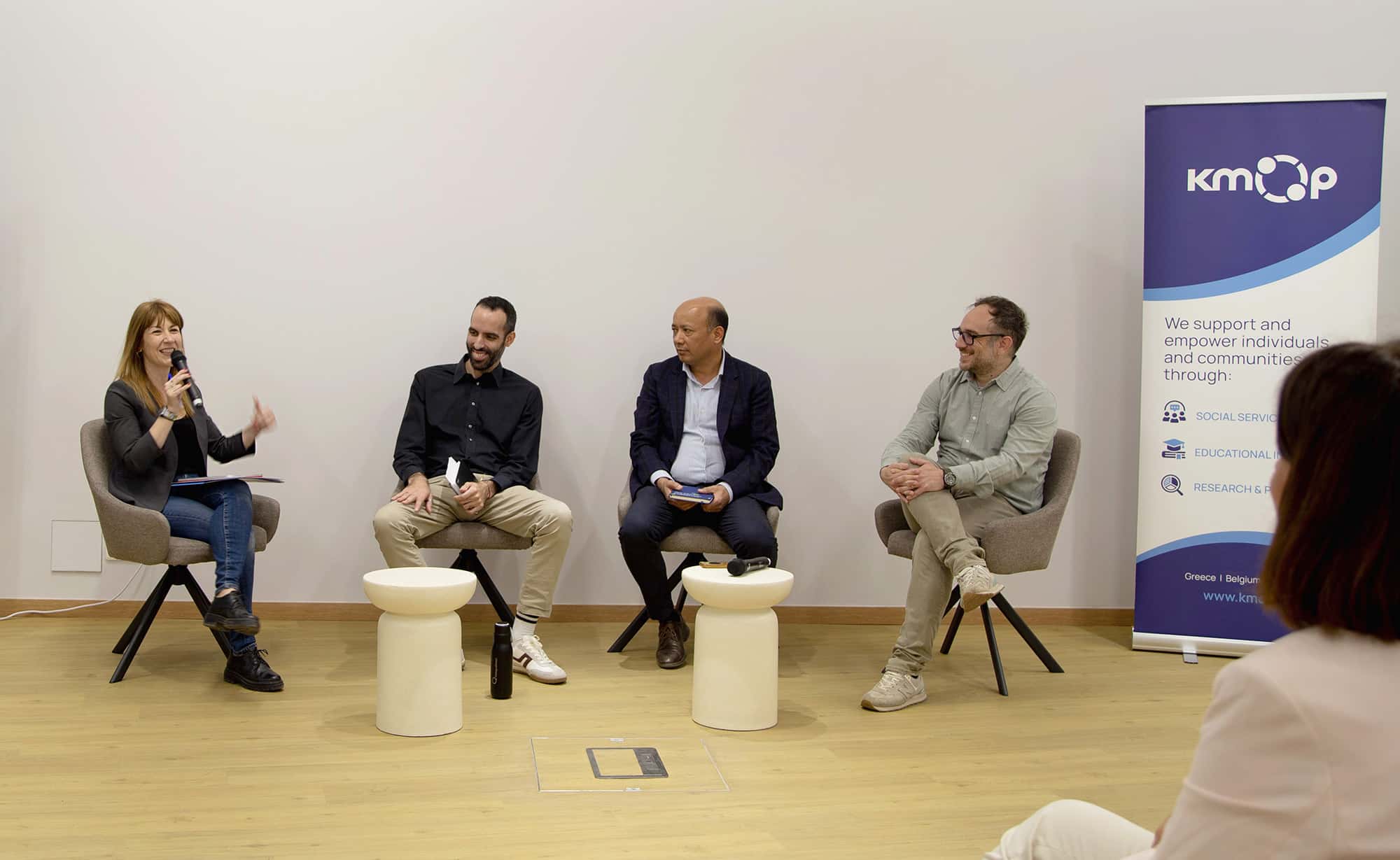
On Wednesday, April 29, 2026, KMOP hosted the discussion “Dimensions of Well-Being in Employability and Educational Social Services” in Piraeus, creating a vibrant space for dialogue and meaningful exchange among representatives from academia, local government, civil society organisations, and the wider public.
The discussion focused on the concept of prosperity and “well-being” and the need to redefine it through criteria that reflect people’s real-life experiences rather than relying exclusively on economic indicators. Participants explored a multidimensional understanding of well-being that incorporates social cohesion, trust in institutions, a sense of safety, and meaningful access to services.
Dr. Panagiotis Katrakazas, Coordinator of the BENEFITS project, opened the event by presenting the initiative’s main objectives and framework. He highlighted BENEFITS’ ambition to showcase the broader social and economic impact of social services, particularly in relation to vulnerable population groups and the consequences of their limited participation in policymaking processes that directly affect them.
Dr. Margarita Markoviti, Professor of Political Science at The American College of Greece (Deree) and IE University, moderated the workshop on behalf of KMOP. She guided the day’s discussion toward highlighting the gap between formal and actual access to services and transforming participants lived experiences into concrete and applicable policy recommendations. She also raised the critical question of whether all dimensions of well-being — such as dignity, trust, and social recognition — can or should be measured, or whether the very attempt to quantify them risks distorting their essence.
During the thematic panels, Dr. Margarita Markoviti, Yunus Mohammadi, Director of the Greek Forum of Refugees, and Stelios Vellis, Chief Development Officer at The HOME Project, addressed key issues related to migration, institutional functioning, and trust. Speakers also emphasised the urgent need for a comprehensive, structured, and long-term child protection policy that supports the meaningful integration of unaccompanied and separated refugee children. In particular, they stressed that child protection cannot remain limited to emergency interventions but must also include stability, access to education, mental health support, legal assistance, and meaningful pathways toward social inclusion and independence.
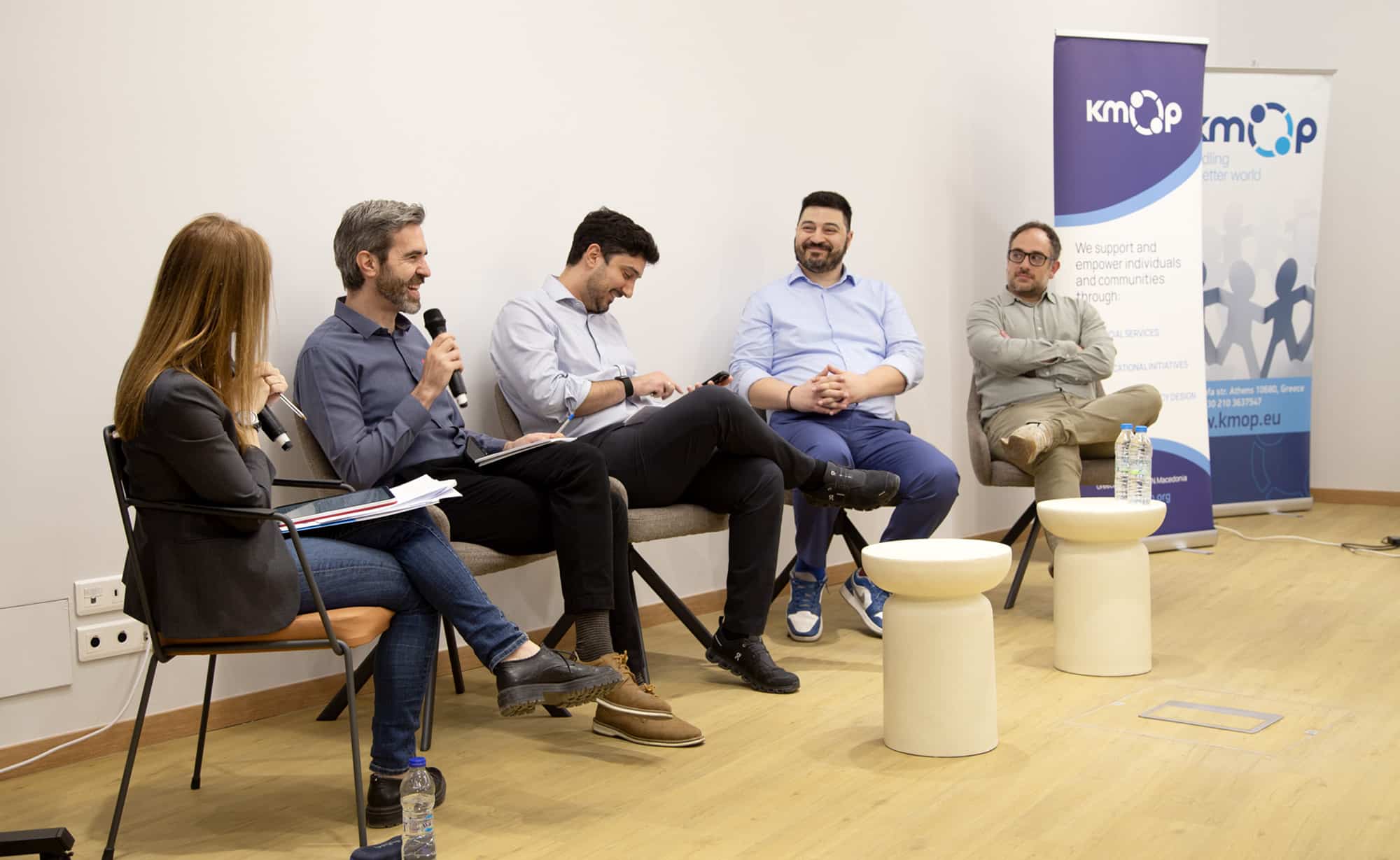
Later in the discussion, Dr. Nikolaos Tzivanakis, Head of Data at the Institute for Global Prosperity at University College London, Dr. Giorgos Melios, Economist at the London School of Economics and Ethos Lab, and Nikos Avgeris, Economist at Ethos Lab, examined social value indicators and the ways they can better capture social progress in relation to social services. A central theme of the discussion focused on shifting from measuring outputs, such as the number of beneficiaries, training hours, and certifications, to assessing real and lasting changes in people’s lives, often extending beyond the timelines of funded programs. Participants highlighted the need for multidimensional indicators that integrate elements such as autonomy, social participation, and a sense of safety, aspects that traditional evaluation methods often fail to capture.
The workshop’s participatory nature made the exchange of perspectives especially valuable, bringing together diverse approaches on how data, indicators of prosperity as defined by the users themselves, and collaborative practices can more effectively support needs assessment, service delivery, and the evaluation of social services across Europe.
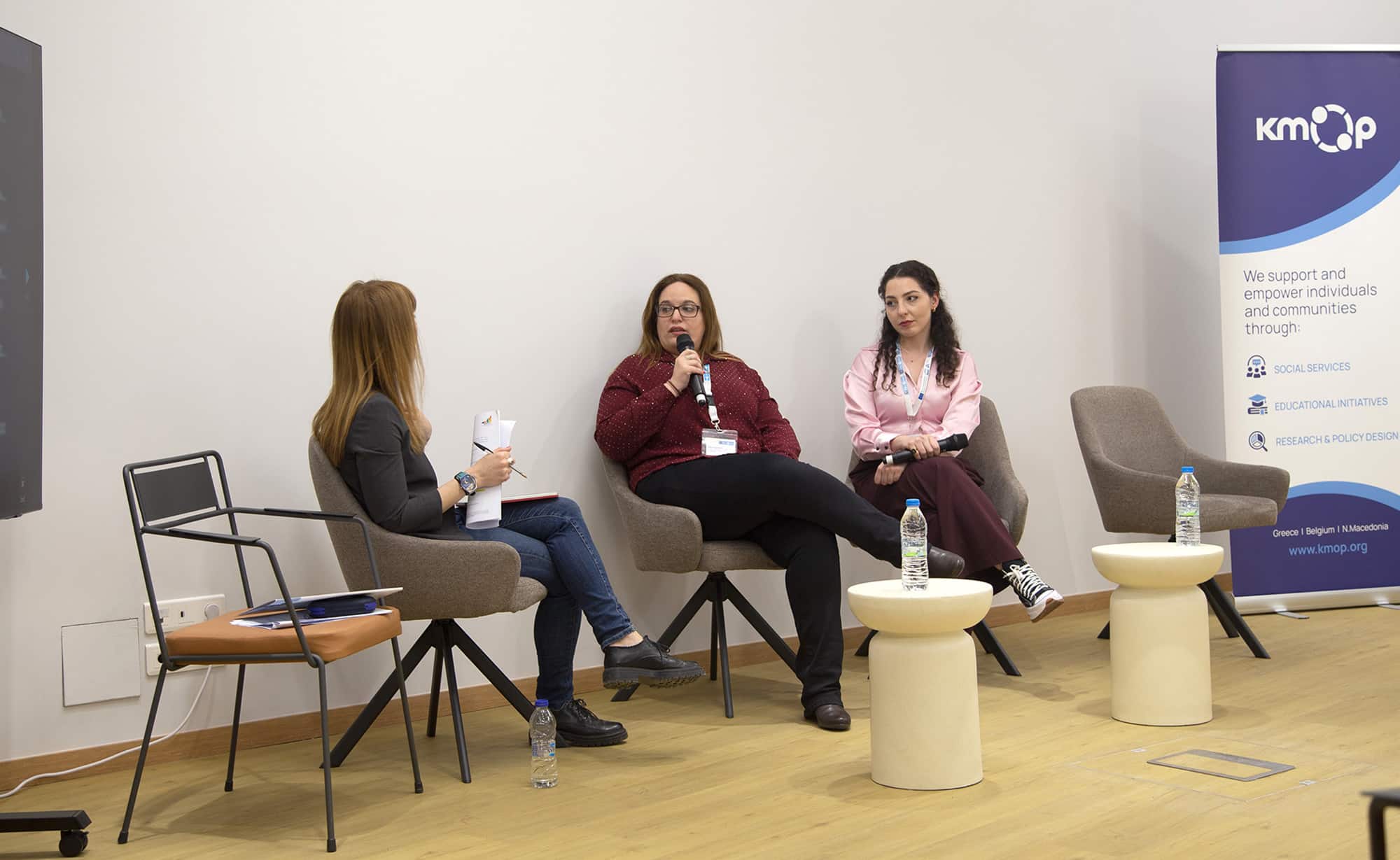
The discussion also strongly connected policy analysis with practical implementation through the contributions of Martha Polychronopoulou, Operations and Networking Manager at the Athens Municipality Job Centre, and Dimitra-Maria Vastaroucha, Employment Counsellor. They discussed both the needs and challenges beneficiaries face in accessing employment opportunities and the practical difficulties professionals encounter while working in service provision sectors, including burnout, lack of information, and insufficient communication among organisations. The participatory sessions that accompanied the event created a meaningful space for exchange and reflection.
Participants shared personal experiences and insights from their interactions with social services, highlighted systemic dysfunctions and challenges, and proposed ways to improve accessibility, effectiveness, and the overall social value of the services provided.
The discussion took place within the framework of the BENEFITS research initiative, through which KMOP collaborates with European social organisations and leading universities to develop new tools and methodologies that measure and analyse the real impact of social services. Through this initiative, BENEFITS aims to address a significant gap in traditional evaluation methods, which often focus primarily on economic criteria while overlooking the full social, economic, and environmental value of these services.
More information about the Horizon Europe-funded initiative “BENEFITS” is available at https://benefitsproject.eu/.
For further information about the event, please contact [email protected].